
ServicesAnnual Recertification
Yearly Live Local Recertification in Boca Raton
A Live Local Act exemption only lasts one year at a time. We test this year's rents against the new income limits, file again with Florida Housing and the county, and send you scans of every document so you know exactly how the property stands.
The exemption does not renew itself
Under the Live Local Act, a qualifying property needs a fresh certification from the Florida Housing Finance Corporation each year. Then a new DR-504AFH goes to the county property appraiser, due by March 1. Miss either step and the set-aside units go back on the full tax roll for that year.
We run that yearly cycle for owners and managers of qualifying multifamily properties in Boca Raton and nearby towns like Delray Beach and Boynton Beach. We pull the current rent roll, check each set-aside unit against this year's limits, and file both pieces. You get scans and screenshots of what we found and what we sent. The record sits with you, not only with us.
If this is the property's first year, start with our Live Local Act Exemption Applications page instead.
What we do each year
- Rent roll and lease check
- We compare the rent on every designated unit to the current year's limits for the county. Rent limits move each year, so a rent that fit last spring may not fit now.
- Income band review
- Units at or below 80 percent of area median income can earn the full exemption. Units up to 120 percent earn 75 percent. When the median shifts, we confirm which band each unit falls in.
- FHFC certification request
- We prepare the yearly request, send it to Florida Housing and keep a copy of the confirmation.
- County DR-504AFH filing
- We complete the form, attach the certification and file it with the property appraiser before the deadline.
- A file you can open
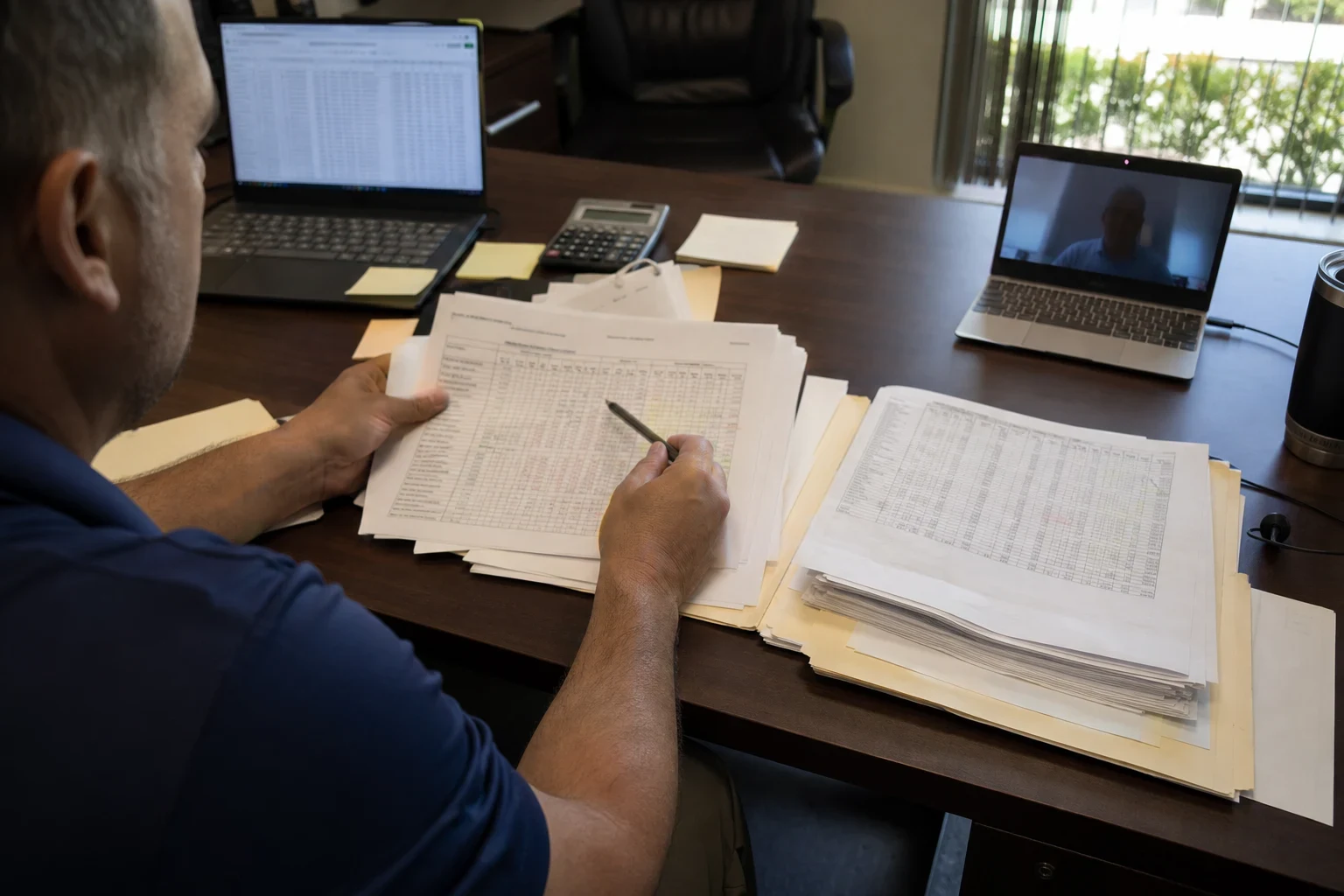
- You get a folder with scanned pages we flagged, screenshots of each filing and a short plain summary. If anyone asks later what was filed, you can show them in a minute.
Signs your renewal needs a closer look
Rents went up mid-year
An increase on even a few set-aside units can push them over the limit. We check before the filing, not after the tax bill.
Turnover in designated units
New residents mean new income paperwork. If move-ins were not verified the same way as last year, the unit count can come up short.
New manager or new owner
When the people change, the calendar often gets lost. We pick up the old file and keep the cycle going.
Last year was a scramble
If the forms went out the week of the deadline, something likely got skipped. A second look is cheap compared to a lost year.
The tax bill looked off
A smaller exemption than expected usually traces back to a unit count or band change. We find where it slipped.
The renewal, step by step
- 1
A quick first call
We ask about the total units, the set-aside units and last year's filings. That is enough for a free savings estimate.
- 2
Pull the records together
You send the rent roll, leases, income certifications and last year's approvals. We go through them at our office or with you by phone and video.
- 3
Test each unit
Any unit outside this year's limits gets marked, and you get scans with our notes. You choose the fix before we file anything.
- 4
Filings and confirmations
The FHFC request goes in first, and the DR-504AFH follows once the certification arrives. Screenshots of each confirmation reach you the same day.
- 5
Book next year
We mark next year's start on the calendar and let you know which records to keep until then.
What moves the price
Most renewals cost less than the first application because the groundwork is already done. The price depends on how much has changed and how clean the records are. We tell you the scope on the first call so there are no surprises later.
- Number of set-aside units
- More designated units means more leases and income files to check.
- State of the records
- A current, complete rent roll goes fast. Missing leases or unsigned income forms take time to track down.
- Changes since last year
- New residents, rent changes or a new owner add review work.
- Timing
- Starting in the fall leaves room to fix problems. Starting in late February leaves very little.
- Income verification needs
- If new residents were never verified, that work comes first. See our Resident Income Verification page for how we handle it.
Questions about annual recertification
Something not covered here? (561) 786-4331
Do we really have to refile every single year?
Yes. The certification and the DR-504AFH both cover one tax year. Last year's approval does not carry forward.
What if we already missed the deadline?
Call us anyway and we will look at the dates. Florida allows late filings to be considered in some limited cases, but it is not something to count on. We will tell you plainly what is still possible.
Can you take over from whoever filed last year?
Yes. Send us what they filed and we start from there. If something in the old file looks wrong, we show you the page and explain it.
What do the photos and scans actually show?
The rent roll pages and leases we flagged, with notes. Screenshots of each filing and its confirmation. Copies of the final forms as filed.
Could the exemption amount change this year?
It can. If units move between income bands or fall out of compliance, the savings shift. We show you the numbers before we file.
Do we need to come to your office?
No. Some clients like to sit down with us, but most renewals are done by phone and video.
Get this year's renewal scheduled
Describe the property and last year's filings. We will check where things stand and what the exemption is worth.