ServicesFHFC Certification Filing
FHFC Certification Filing in Boca Raton
Florida Housing has to sign off on your property before the county will look at a Live Local Act exemption. We check the rent roll, unit counts and rent limits, prepare and file the request, and send you copies of every page and screen along the way.
What this filing does and who needs it
Getting the Live Local Act tax break on a qualifying multifamily property takes two filings. The Florida Housing Finance Corporation goes first. It certifies that the property meets the rules: more than 70 units set aside for residents at or below set income levels, with rents at or under the published limits. The county property appraiser comes second.
Certification is the step owners tend to underestimate. Florida Housing checks unit counts, income tiers and rents against its own numbers. If your rent roll says one thing and the application says another, the request can stall. Without the certification letter, the county filing has nothing to stand on.
We do this work for owners and managers in Boca Raton and nearby cities like Delray Beach and Deerfield Beach. You see what we found in your records and what we sent, with scans and screenshots at each step.
What the filing includes
Unit-by-unit rent roll review
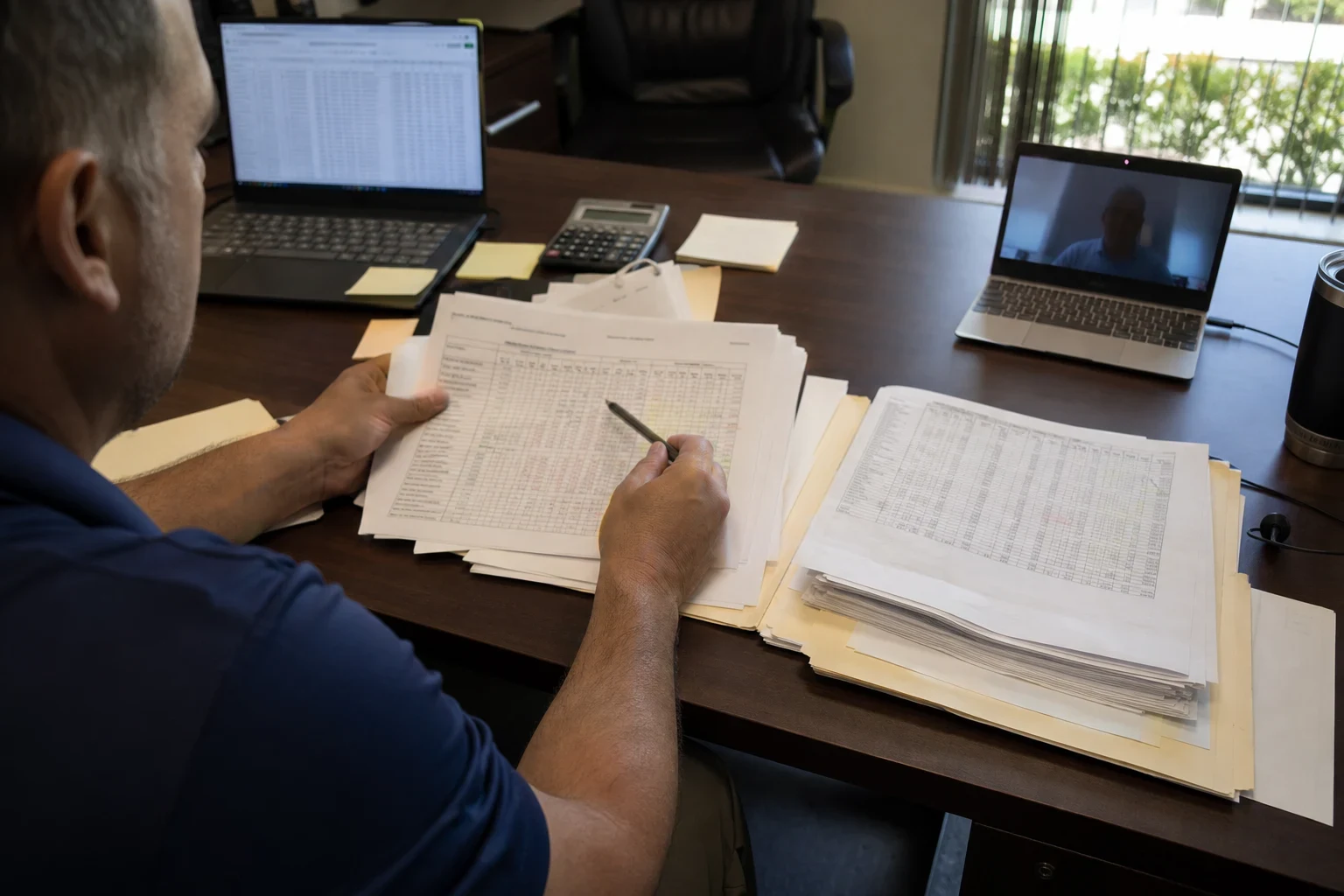
We go through your rent roll one unit at a time. We mark which units count toward the set-aside, which income tier each one falls in, and where rents run high. You get the marked-up copy back.
Rent limit check
Florida Housing publishes rent limits by county and bedroom count. We compare each set-aside unit to the right limit and to the market rent test, and flag any unit that needs attention before filing.
Application packet
We prepare the certification request and pull together the attachments Florida Housing asks for. You review the full packet and sign off before anything goes out.
Filing and follow-up
We file the request and save a screenshot of the confirmation. If Florida Housing comes back with questions, we answer them and send you a copy of the exchange.
Handoff to the county step
Once the certification letter arrives, it feeds straight into your County DR-504AFH Filing. We can carry it into that step so nothing gets retyped or lost.
Signs it is time to file for certification
- You run 70+ units with income-restricted rents
- If a large share of your units already rent to income-qualified residents at limited rents, you may be leaving a tax break on the table. A free eligibility check tells you where you stand.
- The county denied or never saw an application
- A missing or late certification is a common reason an exemption falls through. We look at what was filed and show you where it came up short.
- Leases and the rent roll don't match
- A unit listed at one rent and leased at another is a red flag for reviewers. Better that we find it before Florida Housing does.
- The property changed hands
- A sale, refinance or new ownership entity means the paperwork needs a fresh look. Certification is tied to the owner and the tax year.
- Nobody on your team owns the task
- The county application is due March 1, and certification has to come before it. If it isn't on anyone's calendar yet, now is the time to start.
How the work runs, step by step
- 1
Phone call and eligibility check
Tell us the unit count, the rents and how the property is owned. We give you a straight answer on whether it looks eligible, plus a free savings estimate based on your assessed value.
- 2
Document collection
We send a short list: rent roll, sample leases, income certifications and entity papers. We set up a secure folder so the files land in one place.
- 3
Review and marked-up findings
We go through every unit and send back the marked-up rent roll, with scans of any lease pages that raise a question. You decide on fixes before we file.
- 4
Filing and tracking
We file the request, keep the confirmation screen, and stay on it until Florida Housing responds. Every message in and out gets copied to you.
- 5
Letter in hand
When the certification arrives, you get the letter and a short summary of what was filed. From there it moves to the county application.
What moves the cost of certification filing
We price the job after we look at your property, not before. Two buildings with the same unit count can take very different amounts of work. When you get your quote by phone, we tell you what it covers and what would change it.
- Number of units
- More units means more leases and rent lines to check. A 72-unit building is a different job than a 300-unit one.
- Condition of the paperwork
- Up-to-date leases and income documents let us work quickly. Gaps, like an expired lease or a resident with no income certification on file, mean extra time tracking things down.
- Mixed income tiers
- Properties with units at several income levels need each tier checked against its own limit. That takes more review than a single tier.
- Timing
- Starting close to the deadline compresses the work. Starting early gives room to fix problems before filing.
- Past filings or denials
- If a prior application was denied, we review what went wrong first. That added look is part of the price.
Questions about FHFC certification
- How long does Florida Housing take to issue a certification?
- It depends on their workload and how clean the request is. We can't promise a date. What we can do is file early and answer any follow-up quickly, which keeps the request moving.
- Do I need a new certification every year?
- Yes. The exemption is annual, and Florida Housing certifies each tax year. Our Annual Recertification service handles the yearly filing so you aren't starting from scratch.
- What if some units are over the rent limit?
- Those units won't count toward the set-aside as they stand. We flag each one and show you the lease page and the limit side by side. You decide whether to adjust rents or file with the units that qualify.
- Is this the same as the DR-504AFH?
- No. They are two separate filings. Florida Housing issues the certification. The DR-504AFH goes to the county property appraiser and leans on that certification as its support. We handle both, one after the other.
- Do you need to visit the property?
- Usually not. We work from our office, by phone and video. Your records come to us through a secure folder, and we walk you through the findings on a call.
- Does certification guarantee the exemption?
- No. The property appraiser makes the final decision. A clean certification and a matching county filing give your application the best footing, and that is what we aim to deliver.
Find out what your property could save
Give us a call with your unit count and current rents. We'll tell you plainly whether certification makes sense and what the work involves.